
New Brunswick City Directory Sources
New Brunswick directory research begins with a coverage question, not a name search. The local library, Rutgers collections, the New Jersey State Library, and a federal catalog preserve different leads. The clearest digitized run is four damaged New Brunswick directories from 1855 through 1871, while later volumes are described through library and genealogy holdings. Polk's New Brunswick City Directory also appears in a State Library finding aid for 1940 through 1962. Confirm the exact edition before treating a catalog lead as a readable volume.
| Directory lead | Documented span | Repository or catalog | How it helps |
|---|---|---|---|
| Digitized New Brunswick directories | 1855-1871 | New Brunswick Free Public Library / Internet Archive Community Webs | Earliest digitized local listings; cite the scan and page |
| Later New Brunswick volumes | 1870s to early 1900s leads | Library and genealogy holdings | Ask staff to confirm the exact year and access route |
| Polk's New Brunswick City Directory | 1940-1962 | New Jersey State Library finding aid | Identifies reel coverage, including nearby communities |
| Microfilmed city-directory locator | Circa 1930 catalog lead | National Archives | Points to a federal microfilm location, not a promise of online access |
For an uncertain year, search the year before and after it. A missing listing may reflect an unexamined volume, a changed spelling, a different street form, or the way the publisher collected entries. Note: A directory listing is dated publication evidence, not proof of ownership, identity, or continuous presence.
Four New Brunswick City Directories Rescued
A 2023 preservation effort made four of the oldest known local directories easier to consult after their physical condition had deteriorated. The New Jersey Library Association Chronicle reports that New Brunswick Free Public Library placed the 1855-1871 volumes in Internet Archive Community Webs through a Princeton digitization effort. That history is useful because it explains why a scan, not a transcription, should be the thing cited. The page image preserves headings, abbreviations, street sections, and anything that a plain name result might omit.
The Rutgers local-history guide identifies regional material that can help when a directory year does not answer the question. Its New Brunswick vertical file spans 1801 to the present, and its Middlesex County records run from 1683 to 1929. Those are collection leads, not one combined name index. Record the collection name and any box, folder, or reel information before requesting help.
Rutgers' guide to New Brunswick regional collections is the source for this local-history view.
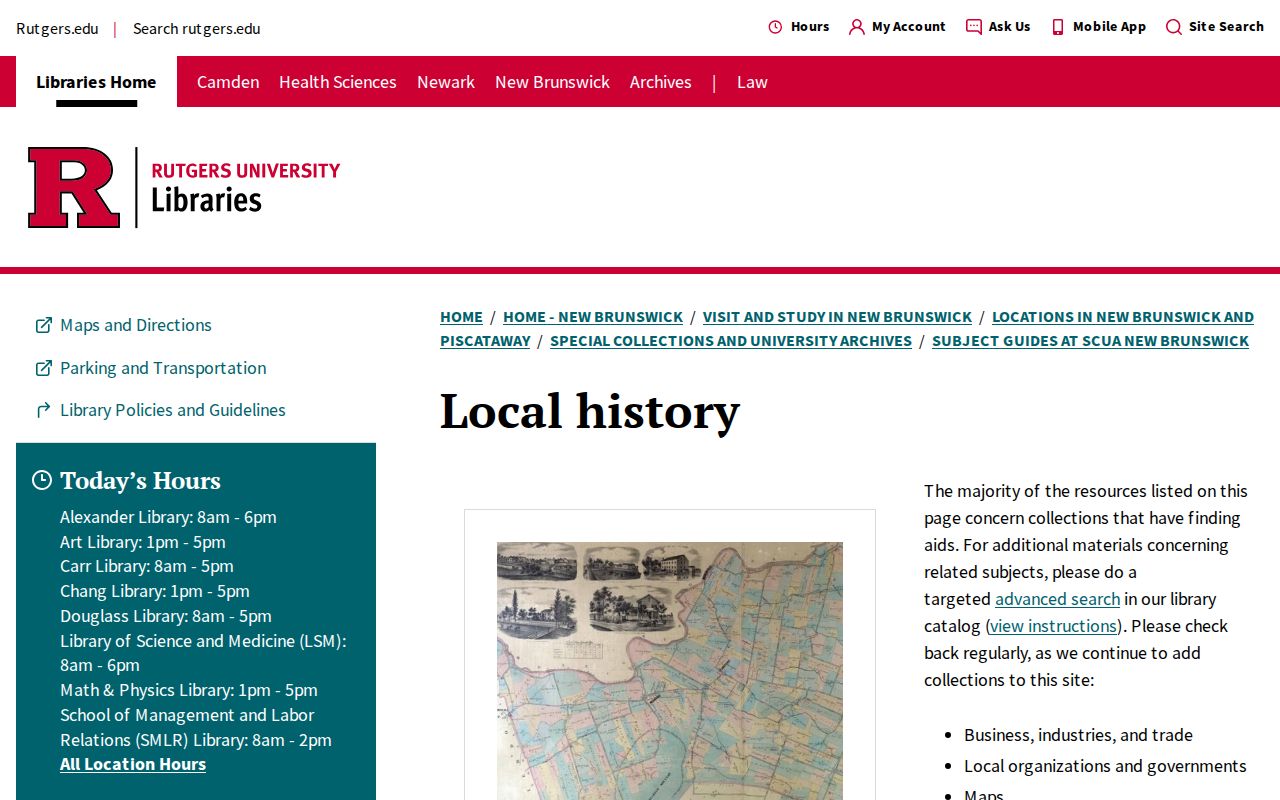
Use the guide to frame a reference request around a year, street, person, or collection, then preserve the library's reply with the final citation.
New Brunswick City Directory Research Stops
The New Brunswick Free Public Library is the practical first contact for local reference work. Its public information lists 60 Livingston Avenue, a reference phone number of 732-745-5108, and nbfpl@lmxac.org. Search snippets describe assistance with microfilm, print and electronic indexes, articles, and partner materials, although the reviewed local-history pages did not expose a complete directory-year list. Ask for a defined year range, a street or surname spelling, and whether a scan, microfilm reel, or in-person consult is available.
Rutgers is a second research stop for regional records and the vertical file. The New Jersey State Library's Middlesex digital collection adds New Brunswick Common Council minutes from 1796-1819 and city ordinances from 1865. Those municipal items can explain a street name, civic improvement, or older place label, but they do not replace a directory entry. County history staff and the State Archives can provide further repository referrals when a local run ends.
The library's online-resources page identifies Reference Solutions and Newspaper Source Plus. They are library-mediated research tools, not municipal registries, so confirm current access with library staff before relying on either one. If a volume is not online, ask for the collection name, box or reel, date range, and whether a research copy can be supplied. The State Archives holds permanent government records and offers genealogy collection searching before a reproduction or research-room request. Middlesex County's historical division and its story map can add local place context when a street name has shifted between records.
New Brunswick Free Public Library
Reference help, local materials, and a route to confirm directory years, newspapers, and microfilm access.
Rutgers Special Collections
Regional holdings, the New Brunswick vertical file, and Middlesex County records provide archival context.
New Jersey State Archives
Use the genealogy collection search before requesting older vital, county, or microfilm material.
Reading New Brunswick City Directory Entries
A directory entry is compact. Read its labels and its neighborhood of entries before drawing a conclusion. The New Brunswick volumes may place a name beside a street number, a role or organization, a spouse or widow notation, and an abbreviated address relationship. The alphabetical section helps find a surname, while a street-order or criss-cross section can test the printed address and nearby listings. A business entry and a personal entry can look alike at a glance, so retain the page context.
| Name form | Preserve initials, spacing, punctuation, and the surname as printed. |
|---|---|
| Street entry | Capture the number, street name, and any words such as rear, corner, or near. |
| Role notation | Copy the abbreviation or organization wording rather than expanding it by guesswork. |
| Household clue | Note a spouse, widow, board, or other relationship marker exactly as shown. |
| Edition reference | Keep the year, publisher, page, and source institution with the entry. |
- Criss-cross directory
- A street-order section that groups printed addresses rather than alphabetizing people.
- Householder index
- An index organized around household names or addresses, where the volume provides one.
- Abbreviation key
- The volume's own explanation of shortened terms. Photograph or transcribe it before interpreting an entry.
New Brunswick City Directories Are Snapshots
Each published volume is a dated snapshot. It can support a statement that a name or organization was listed at a printed address in that edition. It cannot, by itself, establish title to the parcel, a move date, or a link to a modern person with the same name. The New Jersey Historic Preservation Office recommends using directories with deeds, tax ratables, maps, atlases, and municipal records for a careful house history.
That distinction is especially important where a former address has changed. A deed may use a legal description, an annual tax list may reflect an earlier snapshot, and a directory may use a street number that later shifted. For a current address-keyed record trail, the New Brunswick Street Directory follows the parcel and recorded-instrument side without turning a historical listing into an ownership claim.
New Brunswick City Directories Beside Sanborn
Pair a directory listing with the February 1897 New Brunswick Sanborn map when the question is about the historical setting of an address. The Library of Congress item has 31 sheets. A sheet can show a building footprint, use label, stories, nearby structures, and older street geometry. It cannot identify a current resident, and its historical layout may not align exactly with a modern parcel map.
New Jersey State Archives genealogy collections provide another official route for checking older records before requesting material. The collections are useful when a directory name needs a dated event or family connection, subject to the Archives' access rules and coverage boundaries.
The State Archives genealogy-collections search is the source shown below.
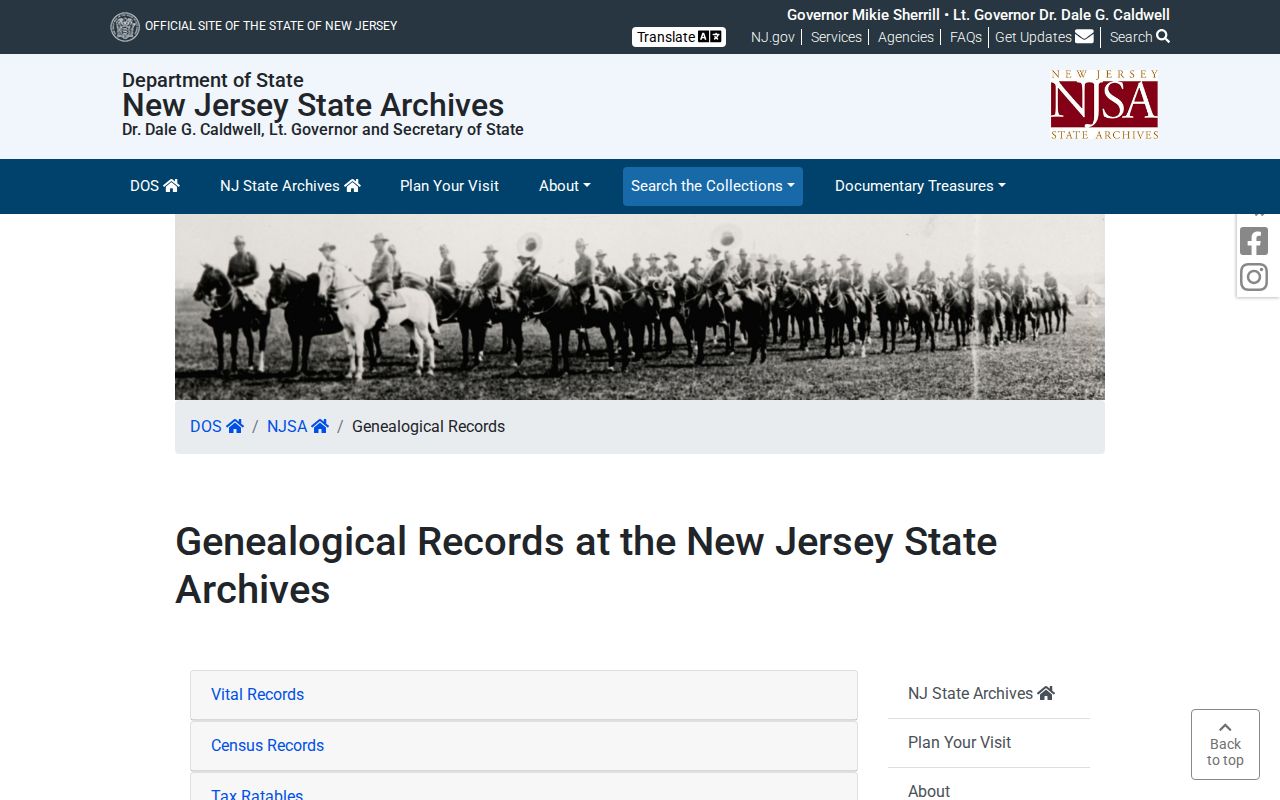
A directory page, Sanborn sheet, and archive result should stay in separate notes until their dates, spelling, and location evidence agree.
New Brunswick City Directory Census Pairing
Census schedules add household structure to a New Brunswick directory search. Federal decennial records become public after 72 years through NARA. The 1950 census is available, while the 1960 census is scheduled for release in April 2032. A census can contain names, ages, relationships to the householder, birthplace, and year-specific responses. Its enumeration district and spellings deserve the same care as a directory page.
Start with the directory year nearest a census year, then compare the address and household without assuming the two sources were collected on the same day. An absent name can mean a timing difference, a changed spelling, an institution, or an unexamined edition. The goal is corroboration from independent dated records, not a forced match.
Note: Federal census access follows its release rule, so later decades should not be assumed available simply because an earlier New Brunswick directory exists.
Trace New Brunswick City Directory Families
Tracing a household works best as a short evidence trail. Begin with an edition that already supplies a name or street number, then expand one year in either direction. Use the street-order section where available, because it may reveal another printed number, an adjacent listing, or a different label for the same place. When no run survives, the library, Rutgers, and Archives can each be asked about a specific date range rather than an open-ended search for a person.
- Record the first directory edition, page, spelling, and printed address.
- Check one earlier and one later edition, preserving each variation rather than silently standardizing it.
- Compare the street-order section or address entry when the volume contains one.
- Pair the closest open census schedule with its enumeration district and household details.
- Use a map, deed, municipal record, or archive finding aid only as a separately dated corroborating source.
A useful worksheet has fields for target address, years checked, page, spelling variants, adjacent entries, supporting source, and unresolved ambiguity. That record makes negative results useful too. It also prevents a later researcher from mistaking a library catalog, an index, and an original page image for the same kind of evidence.
No single public New Brunswick directory master index was located. The durable result is a source map: directory year and page, census year and enumeration district, deed or map identifier, newspaper citation when available, and repository contact. That map records what was actually checked and makes the next request more precise.