
New Brunswick Previous Resident Sources
Address-history research uses a dated mix of New Brunswick property and household records. The Middlesex County Clerk's land index connects conveyance parties to recorded instruments. New Brunswick city directories can place historical occupants at a printed address. Census schedules can corroborate a household, and the 1897 Sanborn map adds the building and street setting. New Brunswick permits supply an application route but no public historical address-search index was located, so do not assume a permit file exists for every address or year.
| Evidence source | Documented coverage | Keeper or route | What it can show |
|---|---|---|---|
| Middlesex deed search | Deeds advertised 1929-present; 2022 notice reaches 1923 | County web search and Bayard Street record room | Recorded grantor, grantee, date, instrument trail, and legal description |
| County mortgage search | 1950-present | Middlesex County Clerk | Borrower and lender record, not an occupancy finding |
| Other recorded documents | 1958-present | Middlesex County Clerk | Maps, liens, releases, easements, and related dated records |
| New Brunswick directories | 1855-1871 digitized; later holdings need confirmation | Library, Rutgers, and State Library leads | Published address or household snapshot by edition |
| Federal census and Sanborn map | Census public through 1950; Sanborn item dated 1897 | NARA access route and Library of Congress | Household corroboration and historic building context |
Begin with the source closest to the date being tested. For a modern parcel, start with the latest recorded conveyance. For an older address, start with the directory or map year already in hand, then seek an instrument or census record that can confirm it. Note: Every row should identify the evidence type and its date rather than calling all names previous residents.
Start With the Current Parcel
Write down the New Brunswick street number, suffix, municipality, parcel or block and lot if available, and search date. A New Brunswick property address can change while the legal description remains stable. The state NJGIN Property Explorer supports address, county, municipality, block, and lot concepts. Middlesex GIS also provides public Parcels and Tax Blocks layers. These services are the way to identify the parcel before treating an old street number as a continuing location.
The annual New Jersey property-tax data describes location and owner fields, block and lot, assessed values, prior taxes, and classification. It is an annual snapshot. Ownership can change after the file, and Daniel's Law can redact covered New Brunswick owner names. A blank field does not prove the parcel has no owner. Keep the tax date separate from the date of any recorded deed.
Parcel first. A current street number is a starting label; the block, lot, and legal description help hold the address trail together when maps or numbers change.
New Brunswick Previous Residents and Deed Coverage
The Middlesex County Record Search System advertises deeds from January 1, 1929 to the present, mortgages from January 1, 1950, and other documents from January 1, 1958. Its published online hours are 5 a.m. to 11 p.m., seven days a week. New Brunswick researchers should search every spelling variation. A browser-based route is preferred over the legacy application for ordinary research, while a separate verified public-search route is login gated.
A county notice from 2022 says older New Brunswick deed books were digitized back to 1923. That does not erase the portal's stated 1929 boundary. For a 1923-1928 deed, test the live search and then confirm at the record room if needed. The County Clerk's staff can explain the computerized index, but the county says staff do not perform a title search. A name hit is a lead, not a finished chain.
Middlesex County's land-record search is the source for the portal and coverage statement shown here.
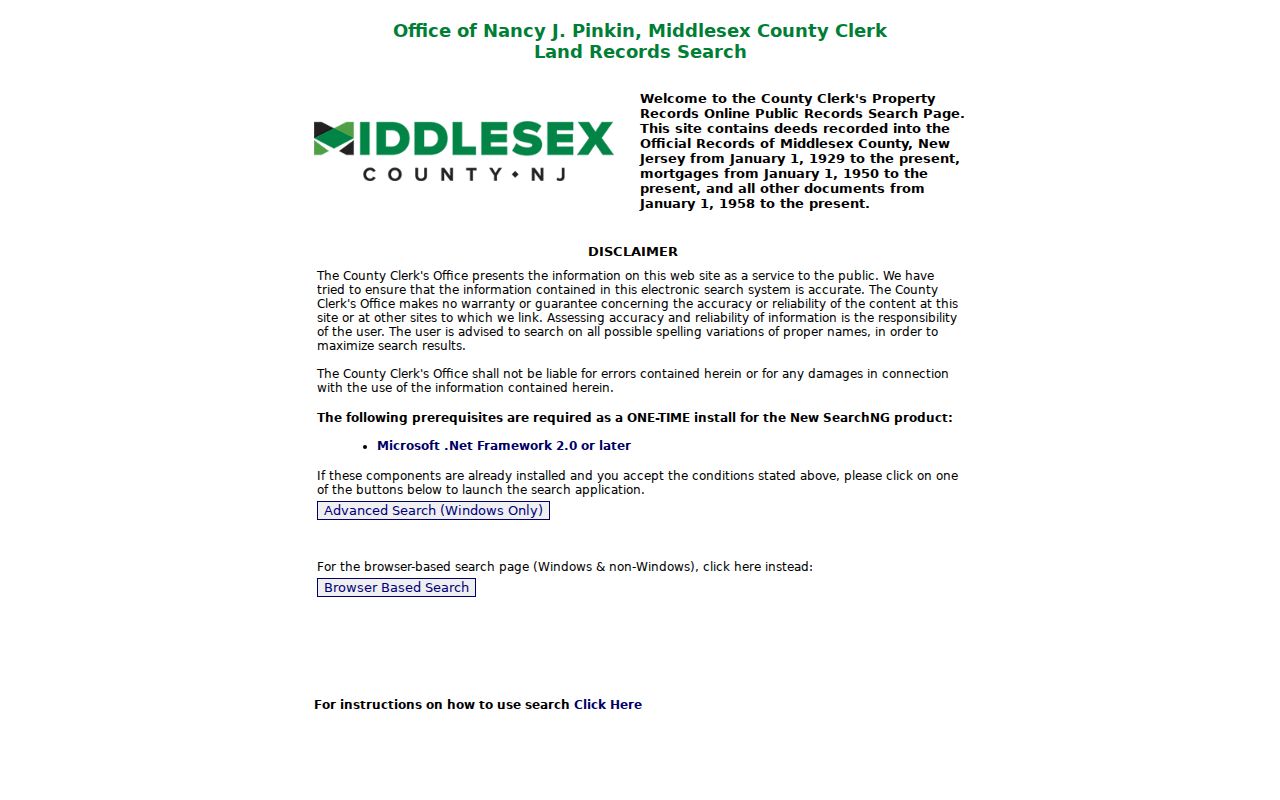
Record the portal date, version of the coverage statement, and the last instrument actually verified before moving to any in-person or archive step.
Trace New Brunswick Previous Residents Through Deeds
New Brunswick deeds supply the backbone for the property part of a previous-residents trail. Begin from a dated parcel lead and locate the most recent conveyance in which the current party appears as grantee. Read the prior party, then search that party as an earlier grantee. At every link, compare the legal description and recorded map references, not only the street number. A subdivision or consolidation can create branches that must be followed separately.
- Capture the current parcel identifier, tax snapshot date, and legal description from the available parcel evidence.
- Find the latest verified conveyance and confirm that its instrument is a deed rather than a mortgage, lien, release, easement, or map.
- Record the grantee, grantor, recording date, instrument or book-page identifier, and the legal description.
- Search the earlier grantor as a grantee, then repeat only when the parcel description remains aligned.
- When online coverage stops, mark the final verified instrument and ask the record room about the next deed book or index volume.
- Grantor and grantee
- The grantor transfers an interest in an instrument; the grantee receives it. Their names do not prove either party lived at the address.
- Chain of title
- A documented sequence of conveyances tied to the same legal parcel, not a sequence guessed from a shared street number.
- Legal description
- The lot, block, subdivision, metes-and-bounds, or map language that identifies land more reliably than an older street label.
New Brunswick Previous Residents Need Evidence Labels
A New Brunswick transfer party is not automatically a resident. A deed can involve an investor, executor, trustee, corporation, lender, or family member. A New Brunswick directory entry can identify a person at a printed address without placing that person in the deed chain. Mortgages, releases, and liens record separate events. The safest way to describe previous residents is to label each record as a recorded party, tax snapshot, directory listing, map label, or census household.
| High confidence | A dated instrument and the same parcel or legal description are visible. |
|---|---|
| Medium confidence | A directory, map, or tax entry aligns with the address, but the deed link remains unconfirmed. |
| Low confidence | Only a name, postal city, or approximate map location appears to match. |
| Stop signal | The legal description no longer aligns, the record series ends, or only a same-name clue remains. |
This keeps the history honest. It also makes a gap actionable: name the last verified date and instrument, then identify the record room, library collection, archive finding aid, or municipal custodian that may hold the next source.
New Brunswick Previous Residents in Old Directories
Directories fill the household layer that deeds cannot provide. The digitized 1855-1871 New Brunswick set, later library and State Library leads, and the National Archives microfilm catalog can show a printed occupant or organization at an address for a particular edition. Read the street section as well as the alphabetical entry. Look for changed numbers, rear entries, an institution, or a name that appears only as a business contact. Each result remains a dated publication snapshot.
The New Brunswick Directory Book details the historical collections and how to cite a volume. For an address trail, take only the information needed to line up directory editions with deeds, maps, and census schedules. When a listing disappears, it may reflect a move, a death, a changed spelling, a missed edition, or the publisher's timing. It should not be converted into a conclusion without another source.
New Brunswick Free Public Library reference service is the local route for asking about directory holdings, newspapers, microfilm, and available research help.
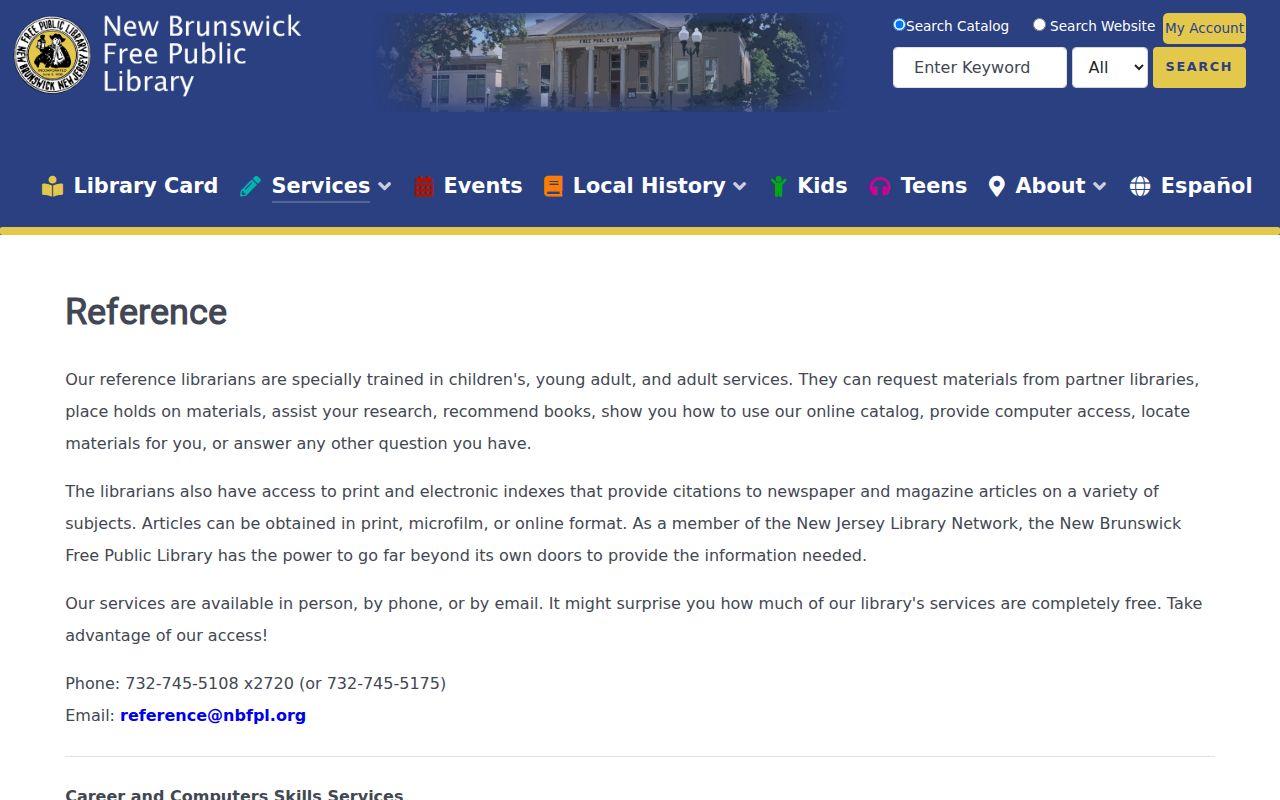
Ask staff for a specific street, name variation, and year range, then preserve the edition and page with every historical listing returned.
New Brunswick Previous Residents on Sanborn Sheets
The 1897 New Brunswick Sanborn item at the Library of Congress contains 31 sheets. It can show the footprint, use, stories, construction details, nearby structures, and street geometry around an older address. Use the New Brunswick sheet beside a modern parcel map and a dated directory. A changed footprint may reveal that a historic address referred to a removed structure, a rear building, or a lot that was later divided.
The Library of Congress New Brunswick Sanborn map is public domain, and Rutgers' New Jersey Sanborn route provides local map-research context. Neither map source identifies a person by itself. Treat its labels as building and place evidence, then compare them with a directory page and the legal parcel record.
Note: Historic map geometry can differ from modern parcel geometry, especially after street changes, removed structures, or lot subdivision.
New Brunswick Previous Residents and Census
New Brunswick census schedules test the household part of the trail. Identifiable federal census records become public after 72 years, and the 1950 census is currently open. A schedule can add names, ages, relationships to the householder, birthplace, and other year-specific fields. Directory and census dates are not interchangeable, and enumerator spelling can differ from a publisher's spelling. Preserve the enumeration district alongside the address and page.
For a dated New Brunswick house history, use this simple sequence: address or legal description, then directory edition, then the closest open census, then map and deed comparison. If the sources disagree, record the conflict. A census household may include people who never appear in the deed chain, while a deed party may never appear in the household. Those differences are the evidence, not an error to erase.
New Brunswick Previous Resident Stopping Points
End the New Brunswick chain when the evidence ends. The correct next step may be a County Clerk record-room visit, a library request, Rutgers archival material, the State Archives, or a municipal custodian inquiry. New Brunswick's city pages establish permit applications and inspection procedures, but not a public historic permit index. Utility customer lists were not located. Do not fill the gap with an assumed occupant, owner, or move date.
Older New Brunswick tax ratables can be useful, but the state house-history guidance notes that roughly 1773-1822 ratables are incomplete. Similarly, a deed-search cutoff does not mean the property history began at that date. It tells you where the available online path stops. Preserve the last confirmed source, its date, its identifier, and the repository that may hold the next volume.
That disciplined stopping point is what turns a list of prior names into a defensible New Brunswick address history.