
New Brunswick Resident Lookup Records
A New Brunswick resident lookup works best when the record chosen matches the question. A property record can tie a named party to a parcel at the date of a tax file or deed. A court result establishes that a case record exists in a named division. A voter record is a registration snapshot, while a directory or vital record can be a historical lead. None is a complete account of a person. Preserve the agency, record date, municipality, and the role shown before comparing results.
| Record | What it can confirm | Official keeper | Access route |
|---|---|---|---|
| Annual property-tax data | Parcel location, owner field when not redacted, block and lot | NJ Transparency and NJGIN | Public annual data and parcel explorer |
| Recorded instruments | Grantor, grantee, document date, and legal-description trail | Middlesex County Clerk | Web search or record room |
| Registration record | Permitted registry information at a dated snapshot | NJ elections and Middlesex election offices | Official lookup or election-list request |
| Court material | Party, docket, county, and division context | New Jersey Courts | Search route or record request |
| Vital and archival material | A historical event or eligible certified copy | New Brunswick Registrar, NJ Health, or State Archives | Eligibility-based order, mail, or research request |
Start from a known address when the aim is a property connection. Start from a year and municipality when the aim is historical family research. The county clerk does not perform title searches, so an instrument hit remains a lead until its legal description and chain are checked.
New Brunswick Resident Lookup Names
New Brunswick name matching needs a date anchor. Test the spelling used in the record, a middle initial, a hyphen or space variation, and a historically documented former surname when appropriate. New Jersey voter guidance notes that the county-supplied spelling and middle initials can affect a match. Record a failed variation too. A result that is absent from one portal may simply sit outside its dates, rules, or jurisdiction.
Use two independent record types before connecting a New Brunswick name to an address. A deed and a directory answer different questions. A tax snapshot and a voter record also have different dates and purposes. The useful comparison is exact: name form, date, municipality, address or parcel, and the person’s role in each record. Do not convert a same-name result into proof of identity.
Verify a New Brunswick Resident Lookup
Verification should move from a narrow, dated clue to a second source that independently supports it. The address may be a parcel situs, a mailing address, an historical service address, or an institutional location. Keep those labels separate. A property tax file can lag a later transfer, and an entry in a directory or case file does not automatically establish current residence.
- Write the full name, known spelling, approximate year, and New Brunswick connection. If an address is known, record the street suffix and municipality exactly.
- Use NJGIN Property Explorer or the state tax data to find the parcel, block, and lot. Note any Daniel’s Law redaction rather than treating a blank owner field as an absence.
- Check the Middlesex County Record Search System for a dated instrument and preserve the party role. A grantee is a likely recipient in a conveyance; a grantor is a likely transferor.
- Compare the dated lead with a court, voter, directory, or archival record. Mark the connection unresolved if the municipality, year, or role conflicts.
For a whole address chain rather than one person, the New Brunswick street directory follows the address-centered records in greater detail. That work should still distinguish an owner, an occupant, and a mailing contact.
New Brunswick Resident Lookup Courts
The New Jersey Courts search landing page separates civil and foreclosure case jackets, criminal cases, criminal judgments, judgment liens, Tax Court, and municipal routes. It is not one universal name index. Civil and foreclosure routes use a party name or docket number; criminal routes use a name and county; Tax Court can use party, docket, block, or lot. New Brunswick Municipal Court matters use the NJMCDirect route with ticket or complaint information, not a free-form resident list.
A docket is the court’s case identifier and history. It shows that a case record exists, not current residence or a conclusion about a person. Search a name variant with the county and division where the official route allows it, then preserve the docket date and party role. Some internal court search forms were not visible during the research inspection, so no unverified field list should be assumed.
The assigned NJ Courts search image shows the official statewide entry point.
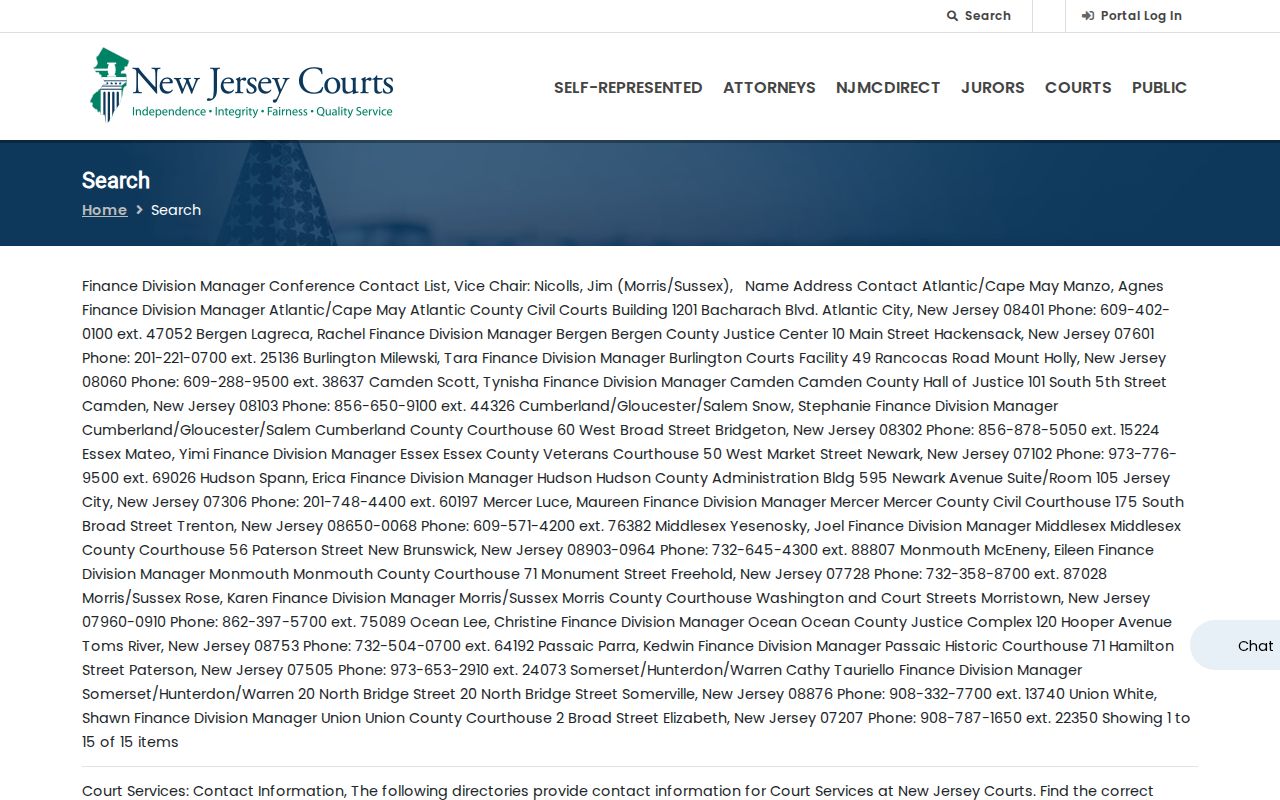
Use the landing page to select the court system that matches the record, then request the underlying material through the court when a copy is needed.
New Brunswick Court Record Details
Confirmed court-result concepts include party name, docket number, county, and case division. The municipal route uses complaint or ticket information, while the Tax Court route includes block or lot context. Exact live result rows, filters, sort order, and download behavior were not captured. Treat that gap plainly instead of guessing what a search screen displays.
| Party name | Identifies a named participant, not necessarily the person’s current address. |
|---|---|
| Docket number | Identifies the case and helps request the correct court record. |
| County and division | Locate the court series and prevent mixing different case categories. |
| Complaint or ticket number | Required context for the municipal self-help route. |
| Block or lot | A Tax Court search concept that can support a parcel question. |
Public inspection and copies remain subject to court rules and record-specific limits. The court records-copy guidance describes requests, copy types, and restrictions. A records request should name the case, division, record description, and desired copy type rather than ask for everything about a person.
Note: Keep the court division and docket date with a result because every search category has its own coverage, access rules, and copy route.
New Brunswick Resident Lookup Voters
New Jersey registry law identifies public categories that include name, address, date of birth, party affiliation, and voting history. It also says the lists are organized by street, residence number, and name, while voter signatures are withheld except by court order. An inactive registration can result when a sample ballot is returned as undeliverable or a voter moves without updating it. That makes voter information a dated registration clue, not proof of current occupancy.
The official Am I Registered? route was blocked during the research inspection, so its live labels and required fields were not confirmed. Exact name spelling, middle initials, and county context are supported by state guidance. For an election-list question, Middlesex County describes a request and password-delivery workflow through its election services page.
The assigned voter lookup image records the official state starting point.
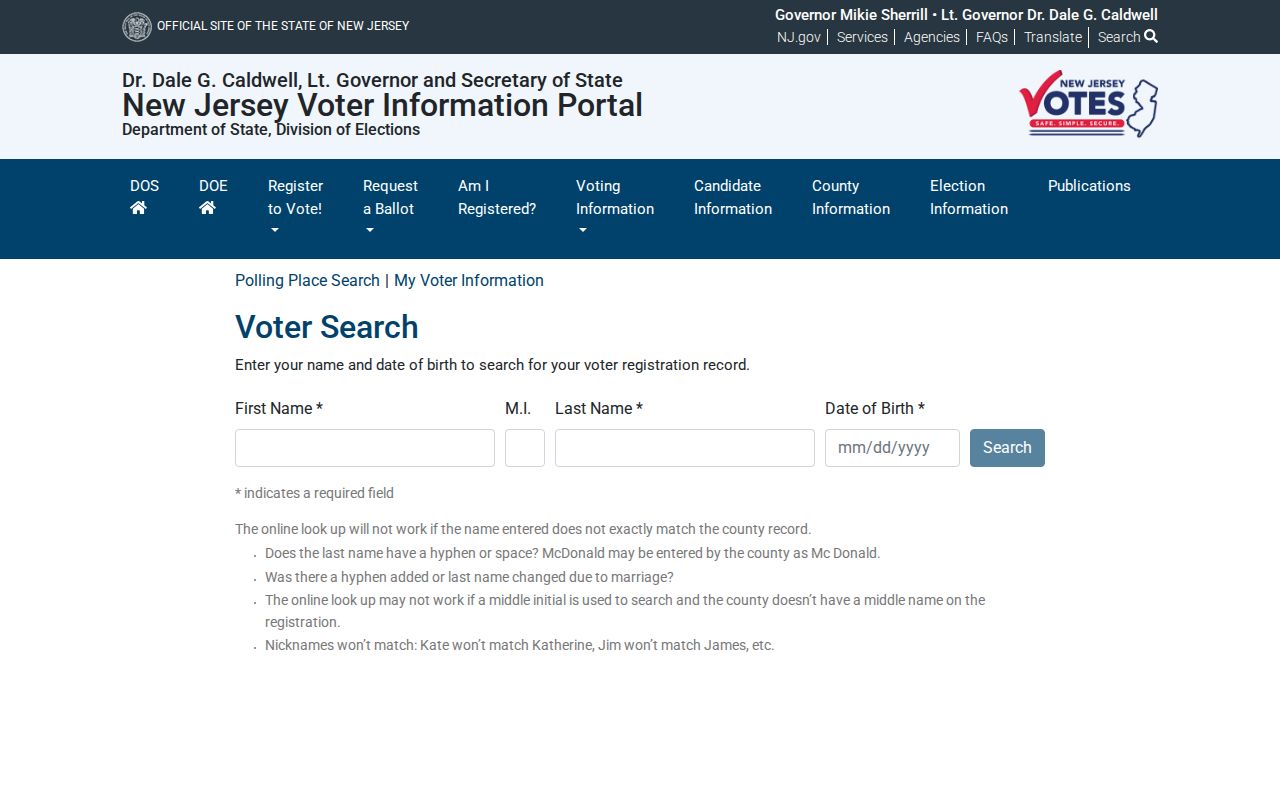
Keep the lookup date and election context with any result, and never infer a ballot choice or private household information from a registry entry.
Note: Printed registry lists have a statutory use restriction, including a prohibition on commercial or charitable solicitation use under N.J.S.A. 19:31-18.1.
New Brunswick Resident Lookup Events
Vital records are event records, not a current-name search. The New Brunswick Registrar issues local certified birth, marriage, civil-union, domestic-partnership, and death copies to eligible requesters. Certified current copies require the stated eligibility, identification, relationship proof, and fee. The city offers in-person, mail, and VitalChek channels, but its researched materials did not supply one universal turnaround promise.
For family history, New Jersey’s genealogical route is often the better fit. Current guidance allows births more than 80 years old, marriages more than 50 years old, and deaths more than 40 years old, subject to its stated cutoffs and archive transfer. The state genealogical records guidance explains the distinction. Match the event year and place before ordering.
- Index
- A finding tool that points to a record; it is not necessarily the record image or a certified copy.
- Image
- A scan of a document or page. Its availability and redactions can differ from the index.
- Certified copy
- A custodian-issued copy used when the agency’s eligibility and certification rules are met.
The assigned local vital-statistics image links to the city’s official instructions.
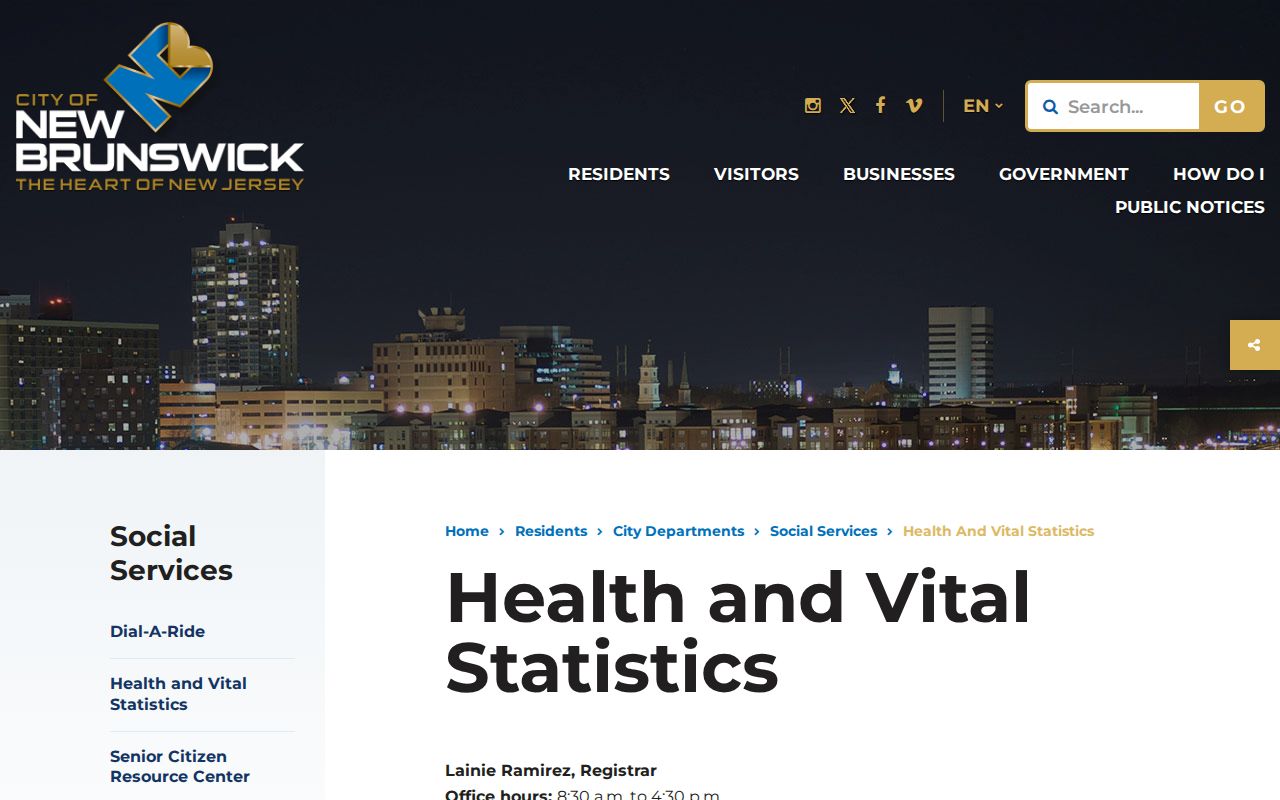
Use an event record to establish its event and date, then seek a separate dated source for a residence connection.
New Brunswick Resident Lookup Archives
Historical identity questions often need an institution rather than a modern portal. Rutgers Special Collections lists Middlesex County records from 1683 through 1929 and a New Brunswick vertical file from 1801 to the present. Its local-history guide is a useful human research route when a name, newspaper reference, organization, or old address needs context.
The New Brunswick Free Public Library can help with directories, newspapers, microfilm, articles, and partner materials, though the researched pages did not establish a complete current directory index. The New Jersey State Archives holds older genealogical and county series. Ask for the collection title, date range, reel or box reference, and whether a scan or research copy is available. That preserves the source without treating an archival mention as a current resident record.
Note: Record the repository, collection, date range, and page or reel number because a finding aid is not the same as a record image.
New Brunswick Resident Lookup Privacy
New Jersey Open Public Records Act access is record-specific. The Government Records Council’s OPRA guidance describes requests to custodians, ordinary response timing, exemptions, fees, extensions, and appeals. A focused request names a record type, date, agency, address or parcel, or case number. A broad demand for every record about a person can be unclear, exempt, expensive, or delayed.
New Jersey’s Address Confidentiality Program provides a substitute address for qualifying people, and Daniel’s Law can require address and identity redactions for covered public officials and their households. A blank owner field therefore does not mean a parcel has no owner. Sealed, expunged, juvenile, medical, identity-document, motor-vehicle, and protected-address details have separate limits. Ask the custodian about correction or redaction procedures for the exact record.